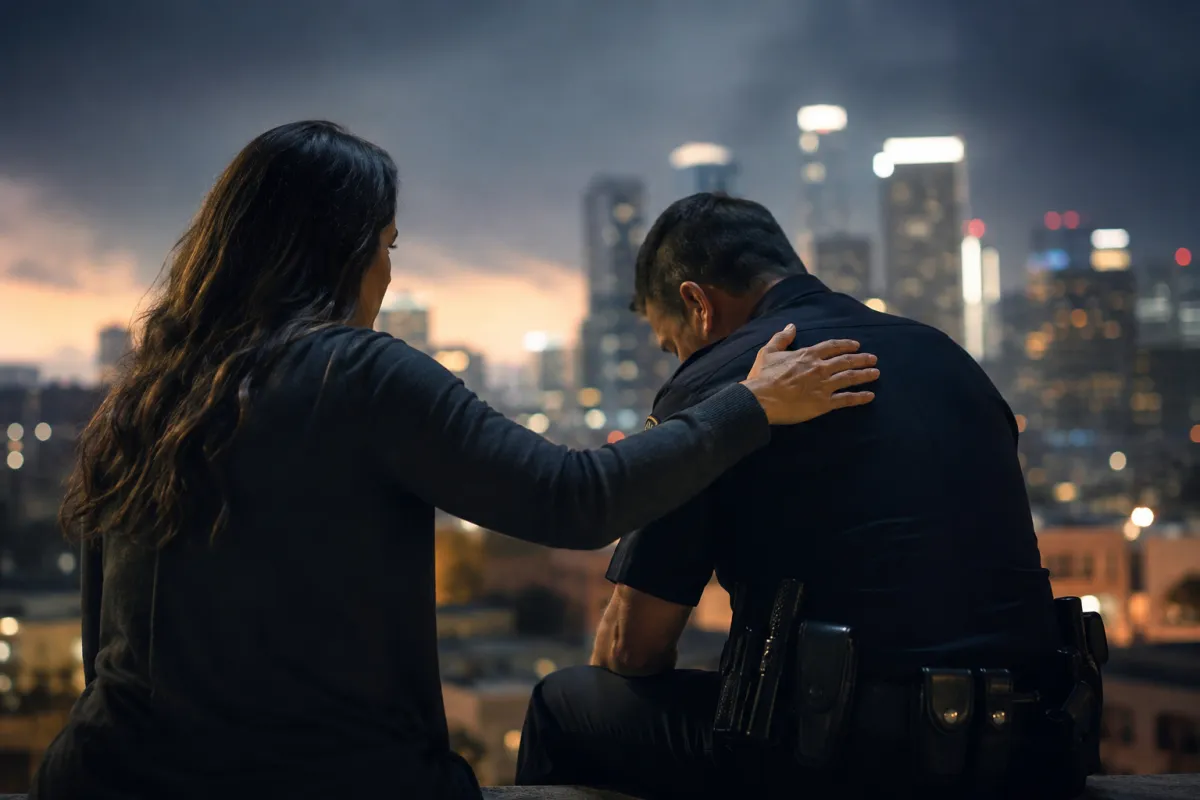
Stigma As A Barrier to Care
Stigma as a Barrier to Care: The persistent challenge of overcoming the fear of judgment and social isolation

The Cost of the Badge and the Silence That Follows
I know what it feels like to carry a weight so heavy that you cannot breathe. I learned this firsthand when my world shattered on Halloween night 1985. My father, an LAPD detective, was ambushed and murdered. That moment plunged me into three decades of CPTSD, hiding behind a poker face while working as a hairdresser for twenty-four years. I watched my father deal with the “Macho” attitude in Law Enforement, So I understand the pervasive stigma surrounding mental health in law enforcement and the urgent need to normalize help-seeking.
But they rarely talk about this pain in their departments, because they are taught to keep moving. And this silent struggle is reaching a boiling point today because people are breaking under the pressure.
And the truth is that our system is deeply broken because it shames officers for processing the very things they are trained to bury. We expect human beings to act like machines, and then we abandon them when the rust starts to show.
The Danger of Compartmentalization: The destructive cultural norm of ‘suck it up’ and burying emotions, leading to severe long-term consequences.
And so they do what they are trained to do, which is to put the trauma in a neat little box and pretend it does not exist. They tell themselves to suck it up, to put on the uniform, and to face the street without showing a single crack in their armor. But I know that when you bury your emotions, they do not just disappear. They rot inside you, and they show up in your sleep patterns, in your relationships, and in your body. I lived it, I experienced it, I learned it. We talk about police stress and mental health as if it is some abstract concept we can solve with a classroom lecture. But it is not abstract when you are staring at the ceiling at three in the morning, feeling completely isolated from the people who love you. And I do care about the official law enforcement mental health statistics because I lived some of that reality, but even those cold numbers show that they are losing a war against themselves. The statistics only show the final tragedy, but they do not show the slow decay of a soul that happens when you refuse to deal with your pain. So they keep compartmentalizing, and they keep pushing people away, and we wonder why our departments are filled with burnout and anger. It is because we are ignoring the human being behind the badge, and we are treating our own pain like it is a crime.
The Fear of Professional Repercussions for Seeking Help
And the reason so many of them stay silent is simple. It is the fear. They are terrified of what will happen if they admit they are not okay, and this is the core of stigma as a Barrier to Care: The persistent challenge of overcoming the fear of judgment, career repercussions, and social isolation associated with seeking mental health help.
First responders avoid seeking mental health help because they fear immediate professional ruin. They worry that admitting to struggle will cause them to lose their badges, their service weapons, or their active duty status. This deep fear of peer abandonment and career devastation forces them to suffer in complete silence.
But this fear of professional repercussions (e.g., losing firearm, being taken off active duty, peer abandonment) for seeking mental health help is what keeps them trapped in the dark. We talk about barriers and facilitators to seeking mental health care among first responders removing the darkness, but the biggest barrier is the culture of judgment itself. So you sit there in your cruiser, or at your desk, and you suffer alone because you think that asking for help means you are weak. You think your partners will not trust you on a call, and you think your administration will strip you of your livelihood. And so you choose the slow, painful death of silence over the terrifying prospect of speaking up. But I am here to tell you that this fear is a lie, and we have to break this cycle before it takes another life.
The Pervasive Stigma Surrounding Mental Health in Law Enforcement and the Urgent Need to Normalize Help-seeking
So how do we actually change this broken system and build a path of resiliency and hope. We have to start by realizing that clinical credentials and textbooks are not enough to heal this deep wound. I believe that lived experience is the most powerful tool I have, because a person who has walked through the fire can reach someone who is still burning. When we talk about mental health for law enforcement, we need to bring first responder mental health awareness out of the classroom and onto the street. And we must support legislative efforts to strengthen national mental health support for officers, including bipartisan bills aimed at reducing stigma, improving access, and ensuring confidentiality. But laws alone will not save us if we do not change how we treat each other. We have to address the pervasive stigma surrounding mental health in law enforcement and the urgent need to normalize help-seeking if we want to see any real change. I know this because my father’s case is still documented and used to train recruits, and his death taught me that they cannot survive this job alone. They need peer support, and they need real, raw conversations where they can say, I am hurting, and have someone say, I get it, because I have been there. That is how we build true resiliency and hope, and that is how we save lives.
Frequently Asked Questions
Does mental health disqualify you from being a police officer?
Seeking help for your mental health does not automatically disqualify you from being a police officer, but staying silent and letting your trauma fester can absolutely end your career. I know that many officers fear that talking to a professional will ruin their lives, but the reality is that getting help early is what keeps you on the street and keeps you safe. And we must understand that taking care of your mind is just as important as keeping your body fit for duty.
Why is maintaining holistic wellness essential for police officers?
Maintaining holistic wellness is essential because police work demands your entire body, mind, and spirit, and you cannot survive the constant trauma of the street if you only take care of your physical strength. I learned that burying your emotional pain while trying to stay physically strong is a recipe for disaster, and you must heal your mind if you want to protect your body. So we have to treat wellness as a whole package, not just a physical fitness test.
What can officers do to help reduce the number of police suicides?
Officers can help reduce suicides by speaking openly about their own struggles and showing their peers that lived experience is a source of strength rather than shame. They must check on each other, listen without judgment, and actively break down the walls of silence that keep our brothers and sisters isolated in their pain. And they must remember that offering a hand to a struggling partner is the most honorable thing we can do.
Healing on the Other Side of the Badge
And so I want you to know that there is hope, and there is healing waiting for you on the other side of this pain. I lived with this silence for many years in the darkness of CPTSD, and I know how impossible it feels to step into the light, but I am living proof that you can reclaim your life. Seeking help is not a sign that you are broken, but it is a sign that you are ready to fight for your own survival. We must choose resiliency and hope over the fear of judgment, and we must start taking responsibility for our own healing today. You do not have to carry this badge of silence anymore, and you do not have to walk this path alone. So take that first step, reach out to someone who understands, and begin the journey of putting yourself back together.
